Business & Digitalisation
E-Invoicing
Since 2025, businesses in Germany must be able to receive e-invoices, and sending them is becoming mandatory step by step. The transition is planned and implemented technically.
Scope of services
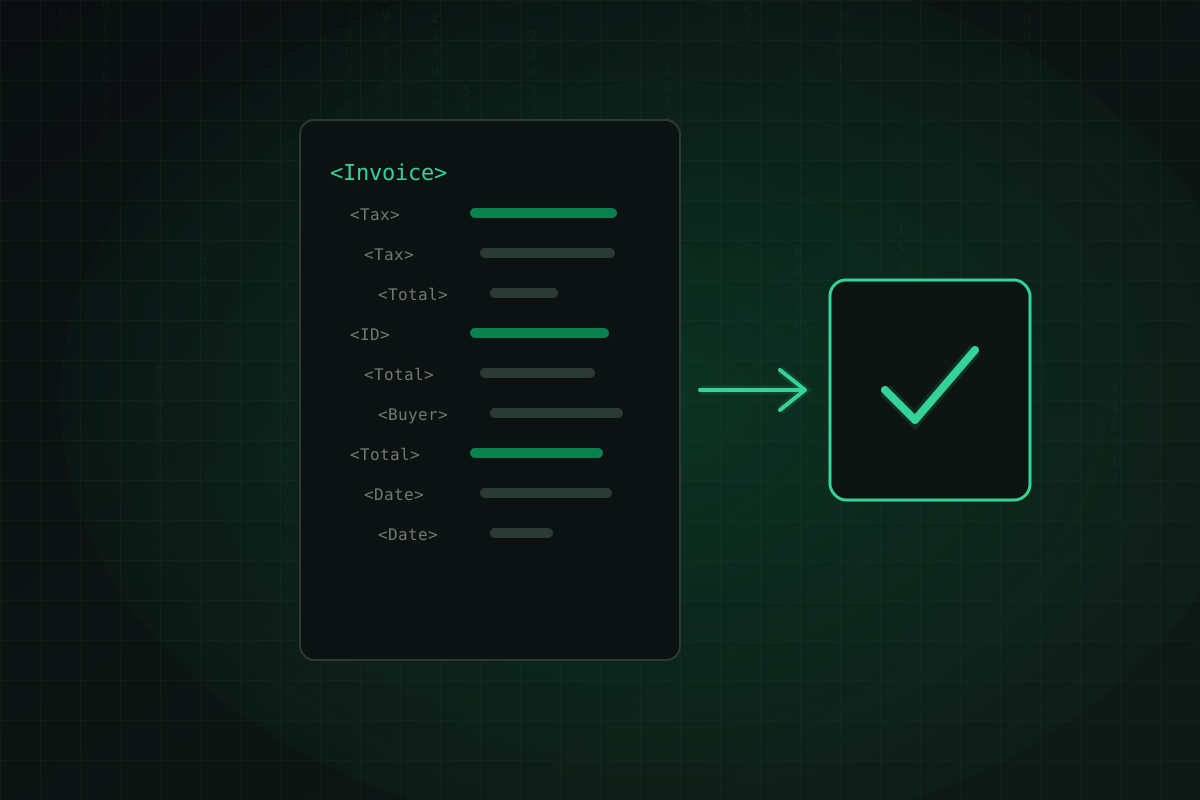
Invoices that systems understand.
Incoming e-invoices are validated and processed automatically, and outgoing invoices are created in the right format directly from ERP or accounting.
- Transition to XRechnung and ZUGFeRD
- Validation of incoming e-invoices
- Integration with ERP and accounting
- Automated invoice processing
Process
How it works.
01
Current state
Invoice channels and systems are recorded.
02
Formats
XRechnung and ZUGFeRD are set up as required.
03
Integration
ERP and accounting are connected.
04
Automation
Incoming invoices are checked and processed further.
Benefits
What you gain.
Requirement met
Receiving and sending in the required format.
Less manual work
Invoice data flows on automatically.
Fewer errors
Automatic checks instead of retyping.
FAQ
Good to know.
When does mandatory e-invoicing apply?
In Germany, companies have had to be able to receive e-invoices since 2025; transitional periods until 2027 or 2028 apply to sending.
Is a PDF an e-invoice?
No. An e-invoice is a structured format such as XRechnung or ZUGFeRD that can be read by machines.
Does this work with the existing software?
Often yes. It is checked whether ERP and accounting support the formats or need to be extended.
Related
Related services
Next step
Let's talk about your IT.
A first conversation clarifies the starting point and possible next steps.